Because playful is how honesty gets in the door.
Sit two people down and say "let's have a deep conversation," and everyone tenses up. Deal five cards instead, and something else happens — people talk and play at the same time: turns create safety, laughter lowers the stakes, and the question comes from the deck — not from someone building up the courage to ask it. Play is the oldest trick for telling the truth.
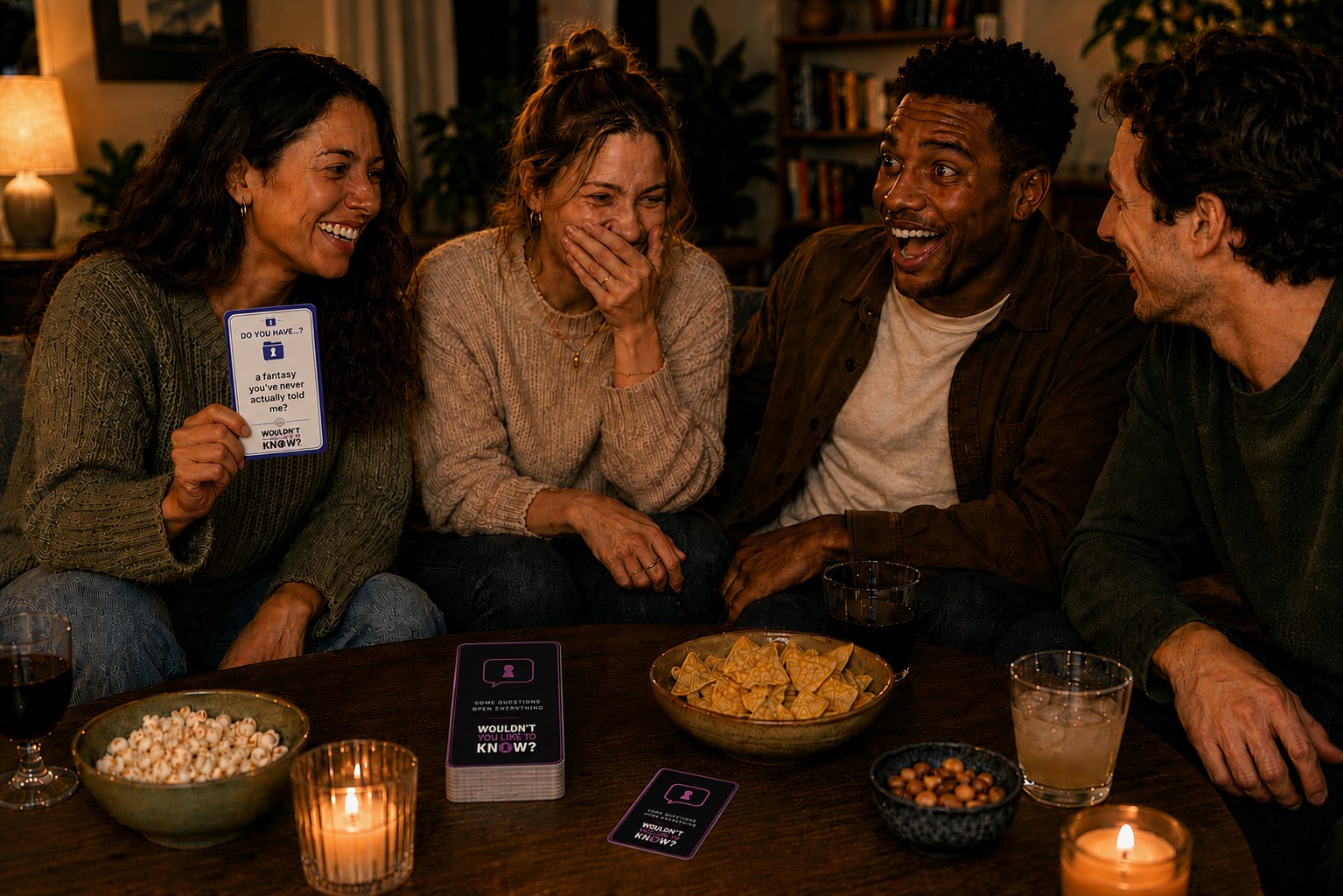
That's why the game is both — honest and playful, tender and daring, real answers wrapped in a game people actually want to play again. The cards start the conversation. The conversations build the relationship. And the people at the table walk away knowing each other — not each other's profiles.
More connected than ever. Talking less than ever.
We text instead of ask. We react instead of answer. We get to know each other through screens — and somewhere along the way, the real conversation got rare.
Think about how we meet people now. A profile before a face. A chat thread before a coffee. Even the people we love most, we reach through a screen — edited, filtered, and always able to delete the draft. Digital communication lets us curate ourselves, and curation is the opposite of being known.
Honest, face-to-face conversation is a skill. And like any skill, it fades when we stop practicing — we get awkward at eye contact, quick to deflect with a joke, unsure how to answer a real question with a real answer. Not because we don't want closeness. Because we're out of practice.
Know yourself first.
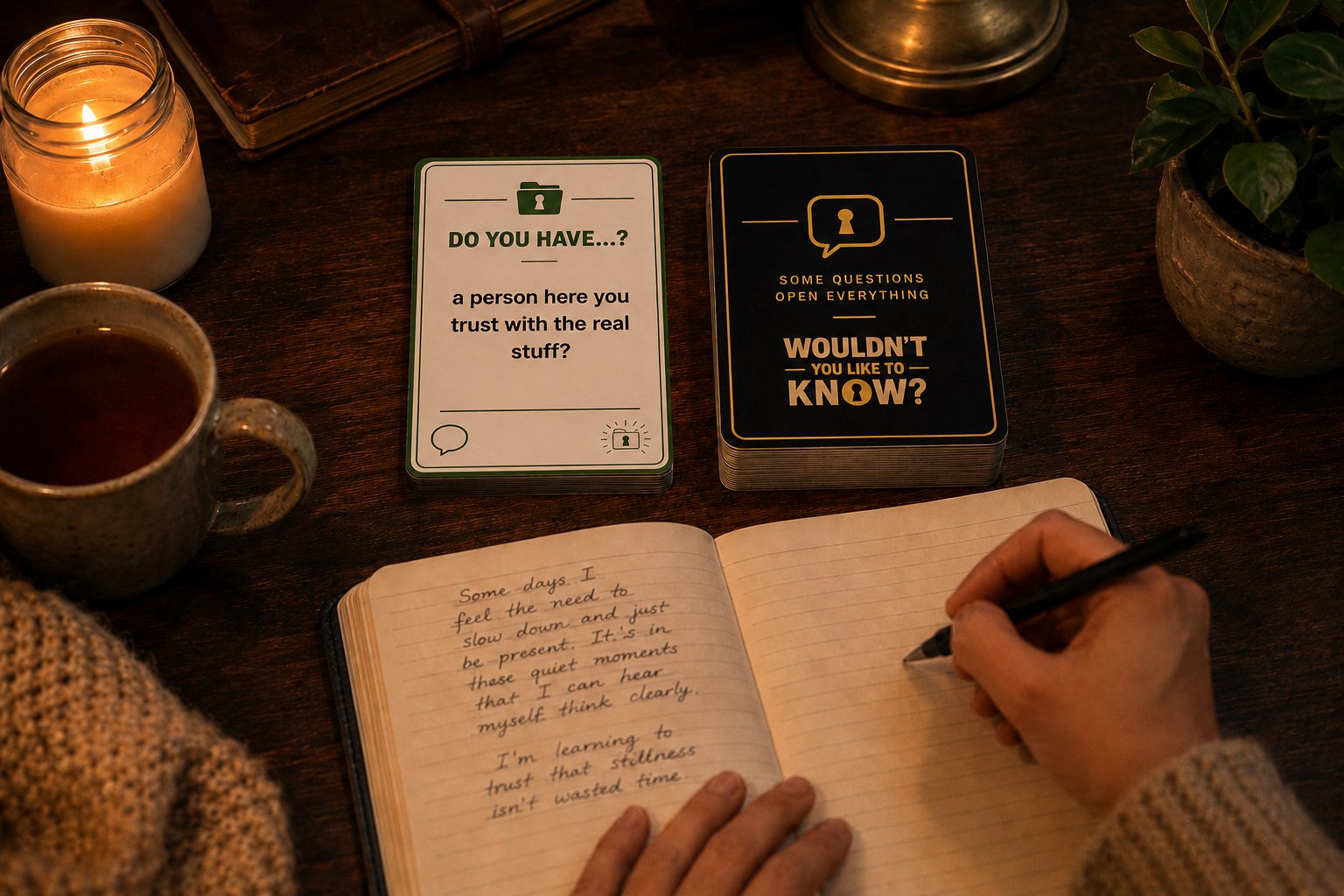
Played solo, the deck is an introspection practice — draw a card, write your honest answer.
- Writing an answer down slows a racing thought into actual words — you can't share a feeling you haven't found language for.
- The prompts ask what friends don't think to ask, so you discover the stories and patterns you've never named.
- A few minutes a day of answering honestly builds the muscle every real conversation depends on: knowing what's true for you.
Get known, face to face.
Across a table, the same cards become intimacy practice — playful, honest, one question at a time.
- Closeness isn't built in grand gestures — it's built in small, honest exchanges, repeated. Every card is one.
- The card asks the question, so nobody has to work up the nerve — and answering out loud, eye to eye, does what no text thread can.
- Playing regularly makes honesty a habit between you, not a special occasion.
We played it. The room changed.
This page isn't only theory. The first version of this idea hit a table full of cousins and family playing a card game. We started talking about this idea — and there was laughing, a lot of it. There were more than a few "oh my goodness, I can't believe you just said that" moments. And in between, something quieter: conversations none of us had thought to start, and stories we'd never heard from people we'd known for years.
We walked away closer — and we noticed. Everyone at that table felt what a night of open, real, honest conversation does to a group. That late night, somewhere between the ice cream and the cocktails, is why this game exists.